
Ejvind Mortz, PhD
COO and Co-founder of Alphalyse

Ejvind Mørtz is a leading figure in proteomics and mass spectrometry analysis with more than 30 years of experience in biotechnology and protein biologics development. He holds a PhD in Protein Chemistry and Molecular Biology from the University of Southern Denmark. He has specialized in developing innovative protein analysis methods for chemistry, manufacturing, and control (CMC) development of protein biologics and complex products like gene therapies.
Ejvind published his first article on protein identification using mass spectrometry in 1994 and has since co-authored close to 50 scientific articles on host cell proteins and mass spectrometry (LC-MS) analysis. His research has earned more than 3,200 citations in academic literature and has been instrumental in shaping best practices for protein analysis by LC-MS, now recommended in the US Pharmacopeia General Chapter <1132.1> for improving the quality and safety of biologics manufacturing.
As an expert in the field, Ejvind has been invited to speak at numerous industry conferences. His contributions include talks at the BEBPA HCP Conference (2016, 2019, 2020, 2022, and 2023), the Bioprocessing Summit (2019), CASSS (2018), and many others.
Key publications:
Delayed bactericidal response of Mycobacterium tuberculosis to bedaquiline involves remodelling of bacterial metabolism. Nat Commun 5, 3369 (2014)
Proteomics Technology Applied to Upstream and Downstream Process Development of a Protein Vaccine, BioProcess International 2008
Improved silver staining protocols for high sensitivity protein identification using matrix-assisted laser desorption/ionization-time of flight analysis, 2001




BEBPA 2026 HCP Conference Highlights: Insights from Alphalyse

Accelerating early-stage process development: eleva case study

Webinar: Meet 2026 regulatory expectations for your HCP-ELISA

Webinar: Best practice Host Cell Protein analysis for vaccines by MS

Open Access article: Comparison of USP 1132.1 quantitation methods

Webinar: Comparison of 3 USP 1132.1 MS quantitation methods

Webinar: Polysorbate-degrading HCPs

Poster: Sensitive MS-based lipase assay for mAb products

Webinar: Problematic HCP impurities can stop your biologics project!

Webinar: ELISA reagent characterization using LC-MS

Ejvind Mortz, COO, to present at BEBPA HCP conference 2023

Webinar: Analyzing vaccine purity – without an HCP ELISA

Webinar: Monitoring impurities and ensure consistent therapies

Article: Monitoring process-related impurities in biologics

Blog post: How to select an HCP ELISA with sufficient coverage

Blog post: Investigation of ubiquitin in purified antibody products

Blog post: Why measure process-related impurities in gene therapies with LC-MS?

Webinar: Are you ready for FDA questions about impurities?

Article: Novel approach to evaluate ELISA antibody coverage of HCPs

White paper: HCP analysis of downstream process samples by LC-MS

Webinar: Design the optimal strategy for analyzing Host Cell Proteins
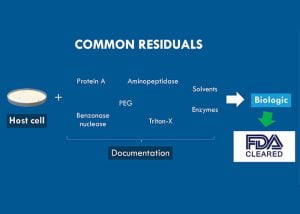
Blog post: How to document removal of a process related impurity

Webinar: 3 reasons to check the coverage of your HCP-ELISA

Blog post: Can I use commercial HCP ELISA kits in clinical trial documentation?
Talk to us
Whatever protein-related challenge or question you may have, we would love to help. Our experts can help you decide on the best analytical approach for your project by email or online meeting - providing advice without obligation.