

This page has been reviewed and verified by Ejvind Mortz, PhD in Protein Chemistry & Molecular Biology
Regulatory authorities demand investigation, monitoring, and documentation of process-related protein residuals generated during biologics manufacturing. Such impurities can reduce drug efficacy and patient safety, and insufficient documentation may delay product approval.
Whereas traditional biologics have manufacturing processes that are well-defined and supported by a panel of established analytical test methods, the manufacturing processes for complex products, like mRNA vaccines, bacteriophages, and advanced therapies, are still in development. Therefore, improved analytical tools, such as mass spectrometry (LC-MS), are necessary to ensure process consistency and quality and to meet evolving requirements for product release and characterization.
Why use LC-MS for residual protein analysis of complex biologics?
Document process-related residual proteins
Identify and quantify cell substrate-derived, cell culture-derived, and downstream process-derived impurities
Evaluate clearance throughout purification steps
Show that your process efficiently clears process-derived impurities, resulting in a pure and safe product
Perform comparability studies
Assess protein impurity levels after process changes, upscaling, or tech transfer between CMOs to document a consistent, comparable product
Curious to know more?
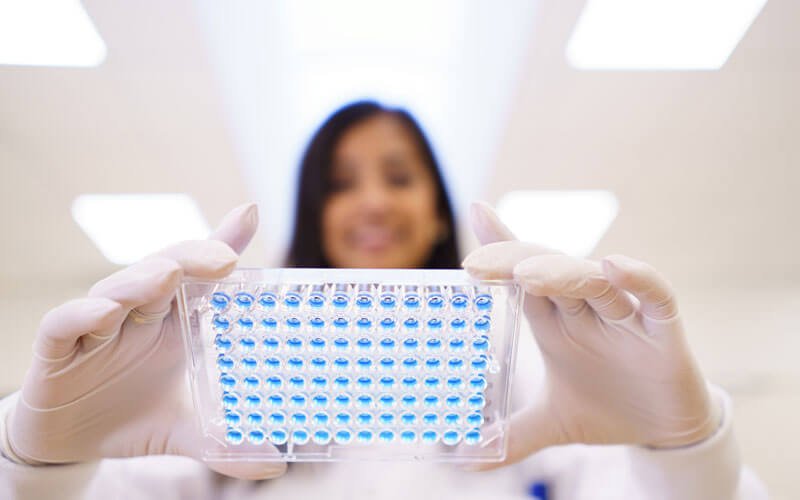
Whatever challenge or question you may have, we are here to help you solve it. One of our protein analysis experts will discuss the best analysis approach or method for your project by email or online meeting – without obligation.
Typical project process
You typically work with
these experts:


Project scope
We will start with an online meeting to learn more about your project. Based on your needs, you will receive a draft proposal outlining the suggested analyses and expected timeframe.
Samples
After signing the final project proposal, we will contact you for details about your samples. An estimated report delivery date will be sent as soon as we receive your samples.
Execution
A project leader will oversee the project and send you status updates by email at regular intervals.
The analysis varies according to the project but typically includes:
- Setting up a sequence database containing all the proteins used in your manufacturing process that could potentially end up in the drug substance.
- An optimized sample preparation developed explicitly for complex products, e.g., viral vaccines and viral vector therapies.
- Analysis using a robust microflow HPLC and SWATH® MS/MS system to ensure high reproducibility.
- Spike-in of internal standard proteins (0-2000 ppm), enabling quantification linearity even to low ppm levels.
Results
You will receive the analysis report by email. Depending on the project, it includes:
- Objectives, description of analytical procedure, results, and conclusions.
- List of the total HCPs in the sample.
- List of individual HCPs, process-related residuals, and their quantities.
- Selected raw data, e.g., excel sheets. You may request additional raw data if needed.
Follow up
Upon completion of the project, your team is invited to go over the results at an online meeting.




Client stories

Lot-to-lot consistency and Host Cell Protein impurity profiling of an adenovirus-encoded vaccine using LC-MS

World’s first GMP-validated MS-based residual enzyme analysis

Webinar: ELISA reagent characterization using LC-MS

Webinar: LC-MS HCP assay validation and GMP release testing
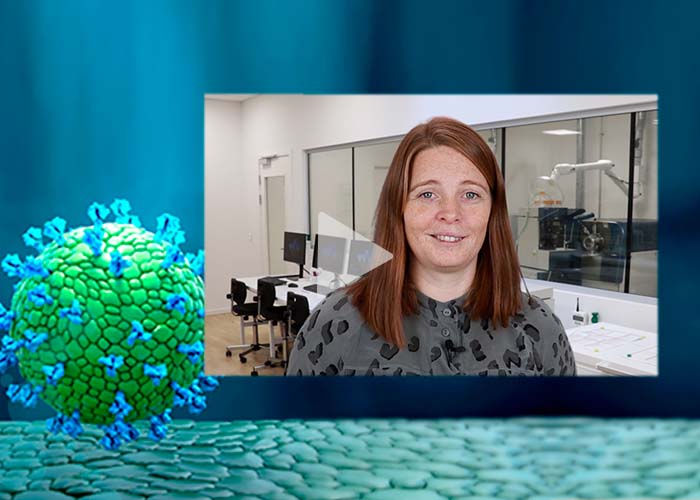
Video: ICH Q8B characterization of complex products

Webinar: Analyzing vaccine purity – without an HCP ELISA
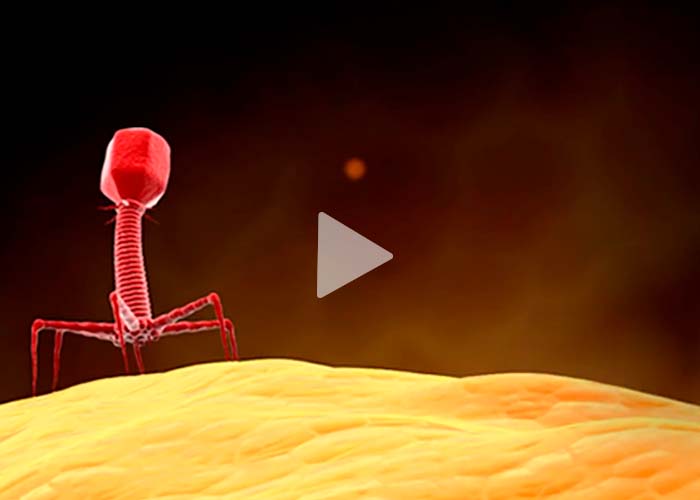
Video: Analysis of bacteriophage product
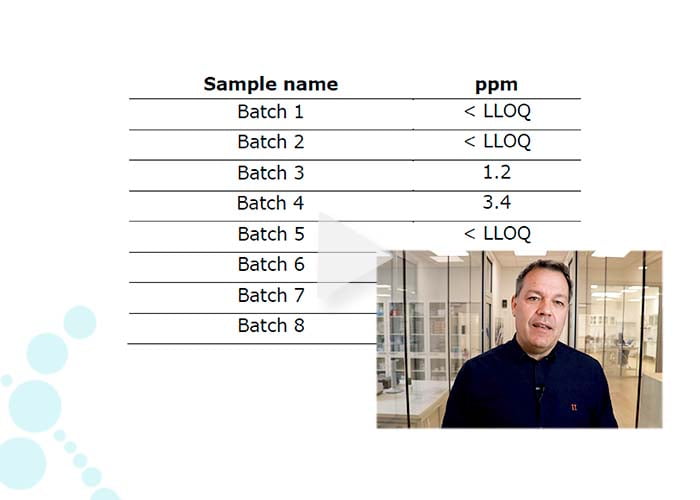
Video: Residual biocatalysis in small molecule API
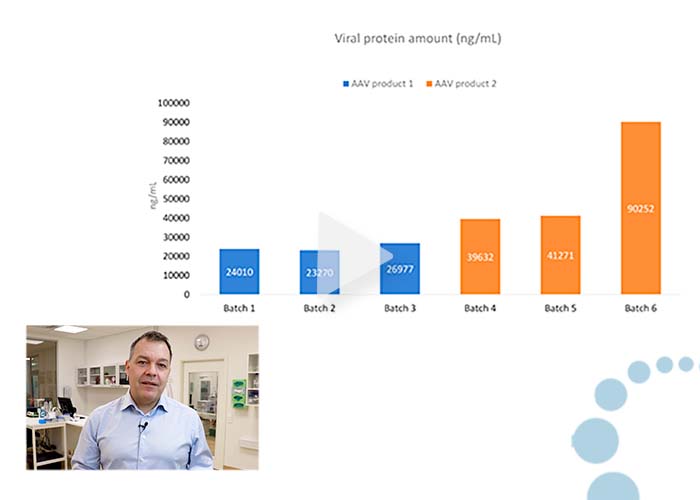
Video: Analysis of residual protein in viral products
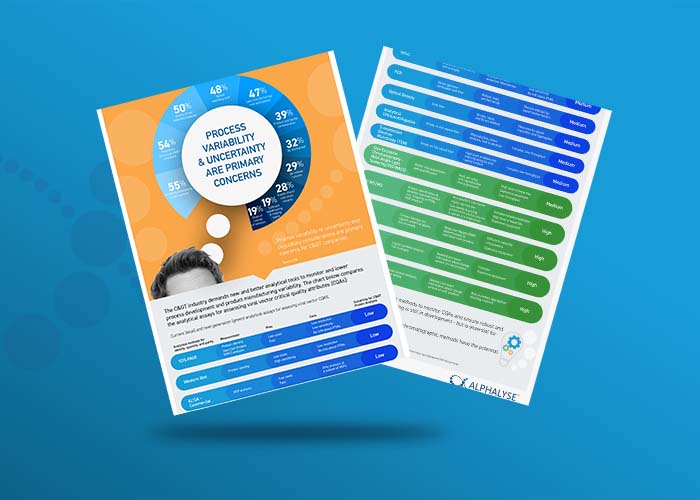
Infographic: Analytical techniques for ensuring consistent C>s

Analysis of individual human residual proteins

Quantifying lentivirus and residual proteins in one assay

Comparing viral protein quantities in AAV batches and DS

Webinar: Monitoring impurities and ensure consistent therapies
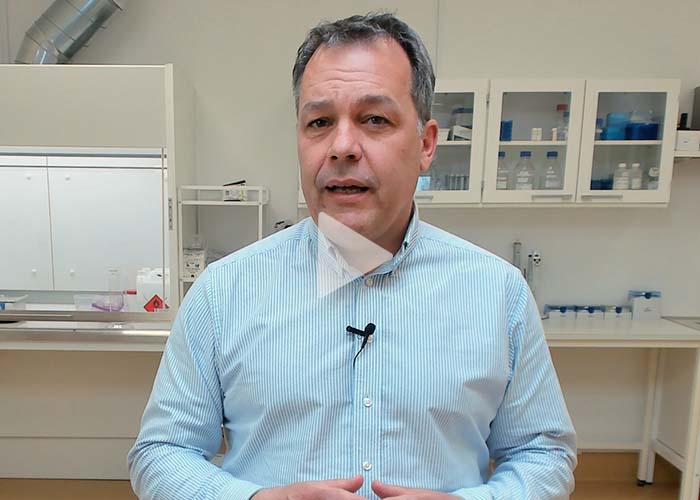
Video: Expression systems without a commercial ELISA kit
Benefits of LC-MS-based impurity analysis of complex biologics
Analyze protein-based residuals from multiple organisms in one assay
Highly robust method not affected by process changes.
Includes quantification of product-specific proteins, viral proteins, etc.
Fast development of assay - within weeks.
Low amount of material required for assay development and analysis
What clients say

Thore Schmedt, Associate Director
AiCuris Anti-infective Cures AG, Germany


Kristiina Hyvärinen, Director QC, viral products
Targovax ASA, Finland

Torben Lund-Hansen, PhD, SVP
Head of Technical Operations
Y-mAbs Therapeutics Inc., USA

Head of CMC, C> Division
GTP Bioways, France

CMC Project Leader, R&D
UK biopharma company
Director, Protein and Analytical Chemistry
Research-based pharmaceutical company
planning the study”
VP CMC and Quality
US Biotech
Program Manager
European Biotech
the ELISA antibodies"
Director CMC US Biotech
Knowledge center
Talk to us
Whatever protein-related challenge or question you may have, we would love to help. Our experts can help you decide on the best analytical approach for your project by email or online meeting - providing advice without obligation.